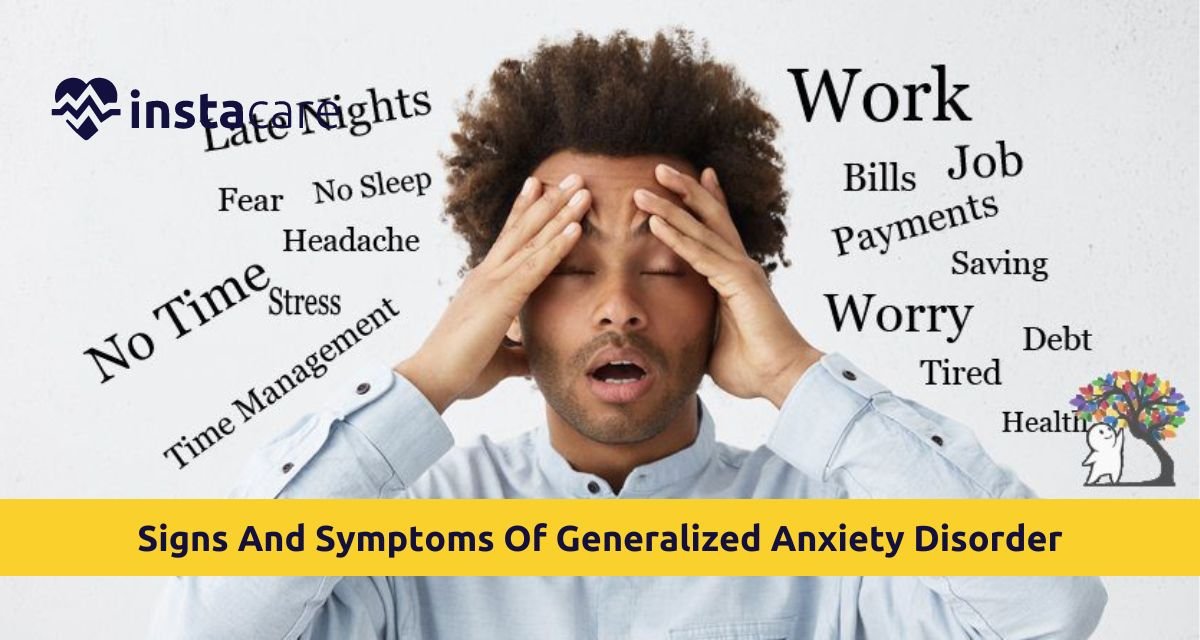
In the labyrinth of our minds, anxiety weaves its tangled threads, casting a shadow of unease that lingers in our every step. But when the whispers of worry crescendo into a deafening roar, it’s time to unravel the mystery behind Generalized Anxiety Disorder (GAD). GAD, a relentless companion that grips the heart and mind, demands our attention as we embark on a journey to tame its overwhelming grip. Let us dive into the depths of GAD, unravel its complexities, and emerge with newfound resilience, one step at a time.
Understanding Generalized Anxiety Disorder: The Constant Buzz of Worry
Generalized anxiety disorder (GAD) is a mental health condition characterized by excessive, uncontrollable worry that persists for at least six months.Unlike specific phobias, GAD involves a constant buzz of worry that may or may not be about anything in particular.People with GAD often worry about everyday events, such as finances, health, or relationships, but their worries can become so intense or excessive that they interfere with their ability to function. GAD can also lead to physical symptoms, such as muscle tension, fatigue, headaches, and difficulty sleeping.
- Persistent worry for at least six months
- Excessive worry about everyday events
- Worry that interferes with daily life
- Physical symptoms such as muscle tension or headaches
| GAD Symptoms | Physical Symptoms |
|---|---|
| Persistent worry | Muscle tension |
| Excessive worry | Fatigue |
| Worry that interferes with daily life | Headaches |
Cognitive Strategies for Calming the Racing Mind: Rewiring Thoughts and Beliefs
To effectively reduce racing thoughts associated with GAD, cognitive strategies can be powerful tools for transforming your inner dialog and reshaping your beliefs. These strategies aim to challenge negative thoughts and replace them with more adaptive and realistic ones. By practicing thought-stopping techniques, actively seeking evidence to disprove anxious thoughts, and refraframing them in a positive light, you can gradually rewire your neural pathways and establish a calmer mental landscape. Additionally, mindfulness meditation, wich involves focusing on the present moment without judgment, can also help regulate emotional reactions and reduce rumination. Cognitive behavioral therapy (CBT), a structured therapy approach, provides systematic training in these strategies, effectively equipping you with the skills to navigate anxious thoughts with increased control. Cognitive restructuring empowers you to transform your mental landscape,creating a more positive and calming inner environment.
Behavioral Techniques for Managing Anxiety: Tools for Coping and control
To effectively manage anxiety and regain control,several behavioral techniques offer practical tools. These techniques target specific anxious thoughts and behaviors, helping individuals to reframe their perspectives, break unhelpful patterns, and develop more adaptive coping mechanisms.Some effective behavioral techniques include:
Cognitive restructuring: Identifying and challenging distorted thoughts that contribute to anxiety.
Gradual exposure: Gradually exposing oneself to feared situations in a controlled setting to reduce avoidance and build tolerance.
Relaxation techniques: Practices like deep breathing exercises, meditation, and muscle relaxation to calm the body and mind.
Thought stopping: Interrupting negative thought patterns by using a physical or verbal cue.
* Problem-solving: Systematically addressing anxiety-provoking situations by identifying potential solutions and evaluating their feasibility.
To Wrap it Up
As you embark on the path of managing anxiety, remember that it is a marathon, not a sprint. There will be setbacks and challenges along the way. However, with persistence, self-compassion, and the strength you’ve found within, you can navigate the storms of worry and find your beacon of tranquility. embracing the lessons learned and fostering a resilient mindset will empower you to tame the anxious beast within, transform your relationship with uncertainty, and ultimately live a life that is fully present, purposeful, and free from the shackles of excessive worry.